
Diya Scripture guide
Hindu Symbols and Their Meanings: Om, Swastika, Lotus and More
The main Hindu symbols and what they mean: Om, the swastika, lotus, conch, chakra, trishula, damaru, rudraksha, tilak and the diya, with the deity behind each.
The short answer
The best-known Hindu symbol is Om, which Hindu scripture describes as the primordial sound of creation.
Other major Hindu symbols are the swastika (an ancient sign of auspiciousness), the lotus, and the objects deities hold: Vishnu's conch, discus, club and lotus, and Shiva's trishula, damaru drum and rudraksha beads. Forehead marks such as the three lines of ash and the Vaishnava tilak, and the diya lamp, are symbols Hindus use every day.
What is the main symbol of Hinduism?

Om (ॐ, also written Aum) is the most widely recognized symbol of Hinduism. Hindu scripture describes Om as the primordial sound of creation, and Hindu teachers explain it as standing for the creation, preservation and dissolution of the universe. The written sign has three curves, a crescent and a dot, and each part of the written Om stands for a state of reality.
Om is spoken at the start and end of many mantras, such as Om Namah Shivaya and the Gayatri Mantra. To chant it yourself, see Chanting Om and Om symbol meaning.
What does the swastika mean in Hinduism?

The swastika (svastika) is an ancient Hindu sign of auspiciousness and well-being. At a 2008 Hindu-Jewish leadership summit, a joint resolution called the swastika an ancient and greatly auspicious symbol of the Hindu tradition. Many Hindus draw it at the front threshold of their homes, especially at Diwali, and often inside rangoli. Its four limbs can be read as the four Vedas.
The Hindu swastika is usually upright, often with a dot between each pair of arms. It has nothing to do with the Nazi emblem, which the Nazis called the hakenkreuz ("hooked cross") and which was mistranslated as "swastika".
What does the lotus mean in Hinduism?

The lotus (padma, kamala) grows clean out of muddy water, and it stands for fertility and regeneration. Vishnu holds a lotus in one hand, and Lakshmi is shown standing on a lotus throne and holding lotuses. See Lakshmi and Brahma.
What do the conch, chakra and club of Vishnu mean?
You can recognize Vishnu by four objects he often carries: the discus, the conch, the club and the lotus.

Shankha (conch). The conch is blown like a trumpet in Hindu rituals, and its sound is considered the purest sound, the one from which creation springs.

Sudarshana chakra (discus) and gada (club). Both are weapons, and they signify Vishnu's power to destroy evil.
What do the trishula, damaru and rudraksha of Shiva mean?
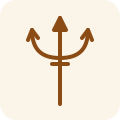
Trishula (trident). Shiva uses the trishula like a spear to destroy demons.
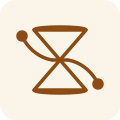
Damaru (drum). Shiva often holds a small hourglass-shaped drum. Its sound is said to create life as it echoes through the cosmos.
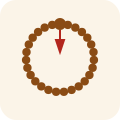
Rudraksha mala (prayer beads). The beads of Shiva's rosary symbolize all time, past, present and future, and going beyond it. Devotees use malas for japa, the repetition of a mantra. See How a mala is used for japa.
What do the marks on a Hindu forehead mean?

Tripundra (three lines of ash). The three horizontal lines on Shiva's forehead represent three aspects of the divine: the creator, the preserver and the destroyer. During puja, many devotees of Shiva mark their own foreheads with these three lines in sacred ash (vibhuti) or sandalwood paste.

Vaishnava tilak (namam). Devotees of Vishnu wear a U- or V-shaped mark, a stylized footprint of Vishnu, applied in sandalwood paste during puja, often with a red line in the middle.
What does the diya lamp mean?

A diya is a small clay lamp filled with ghee or oil. Lighting it is the simplest act of Hindu worship. At Diwali ("a row of lights") rows of diyas symbolize the victory of good over evil, knowledge over ignorance, and light over darkness. It is also the lamp waved in aarti. See How to use a diya at home safely.
Why do Hindu deities hold so many symbols?
Hindu images are meant to be read. Many arms emphasize the deity's immense power and ability to do several things at once, and each hand holds an object that tells you who the deity is and what they do. Once you know the objects, you can recognize the deities on a home altar:
| Symbol | Sanskrit name | Carried or worn by | What it stands for |
|---|---|---|---|
| Om | Om, pranava | All Hindus | The sound of creation |
| Swastika | Svastika | Doorways, rangoli | Auspiciousness |
| Lotus | Padma | Vishnu, Lakshmi | Fertility, regeneration |
| Conch | Shankha | Vishnu | The purest sound |
| Discus | Sudarshana chakra | Vishnu | Power that destroys evil |
| Club | Gada | Vishnu | Power that destroys evil |
| Trident | Trishula | Shiva | Power over evil |
| Drum | Damaru | Shiva | The sound that creates life |
| Prayer beads | Rudraksha mala | Shiva | All time and going beyond it |
| Three lines of ash | Tripundra | Devotees of Shiva | Creator, preserver, destroyer |
| U-shaped mark | Vaishnava tilak, namam | Devotees of Vishnu | Vishnu's footprint |
| Lamp | Diya | Every Hindu home | Light over darkness |
To learn who each deity is, see Hindu gods and goddesses, Vishnu and Shiva.
How to use these symbols at home
Most Hindu homes have a small home mandir with a picture or murti, a diya, and often an Om or swastika drawn in kumkum. A simple daily practice is to light the diya, chant Om or a short mantra, and offer a flower. Diya, the app, lets you light a diya, chant along with mantras and keep a daily practice. Diya is available for iPhone. See the Diya app.
Related reading
Questions people ask
What is the main symbol of Hinduism?
Om (also written Aum) is the most widely recognized Hindu symbol. Hindu scripture describes it as the primordial sound of creation, and it begins and ends many mantras.
Is the Hindu swastika the same as the Nazi symbol?
No. The swastika is an ancient Hindu sign of auspiciousness, drawn at doorways and in rangoli. The Nazi emblem was the hakenkreuz, which was mistranslated as swastika.
What does the lotus mean in Hinduism?
The lotus stands for fertility and regeneration. Vishnu holds one, and Lakshmi is shown standing on a lotus.
What do the three lines on a forehead mean?
The three horizontal lines of ash, called tripundra, are worn by devotees of Shiva. They are read as the three aspects of the divine: creator, preserver and destroyer.
Why do Hindu gods hold so many objects?
Each object is a symbol of the deity's power or nature, and many arms show the deity's power to do several things at once. Knowing the objects lets you recognize a deity in a picture or murti.
Research notes
Sources
Follow the reading behind this article through the references below. Each source represents its own author, institution, or tradition.
- 5 things to know about Om
Hindu American Foundation
- 10 Things You Need to Know About the Swastika
Hindu American Foundation
- 5 things to know about Diwali
Hindu American Foundation
- Puja: How do I identify images of the god Vishnu, his wife, Lakshmi, and their incarnations?
Smithsonian Institution, Freer and Sackler GalleriesPublished by Smithsonian Institution
- Puja: How do I identify images of the god Shiva and his family?
Smithsonian Institution, Freer and Sackler GalleriesPublished by Smithsonian Institution
- Puja: Why do the deities have multiple arms and heads?
Smithsonian Institution, Freer and Sackler GalleriesPublished by Smithsonian Institution
Notice something that needs a closer look?
Email team@trydiya.com. The Diya team reviews source and accuracy corrections.